Fit and sizing
Measured, not estimated
Every piece lists flat garment measurements in centimetres, with a tolerance of plus or minus 1 cm, and the fit notes recorded by the people who tried it on. This page explains what those figures are, how to take your own, and what the opacity rating on each piece means.
Still not sure? Send us your measurements and we will tell you which size we would cut for you.
The body measurements our blocks are cut from
These are body measurements, not garment measurements. Each piece adds its own ease on top, and the flat measurements printed on that piece are what the garment actually measures. Where the two differ, the figures on the piece are the ones that matter.
| EU size | Bust | Waist | Hip |
|---|---|---|---|
| 34 | 80 cm | 62 cm | 88 cm |
| 36 | 84 cm | 66 cm | 92 cm |
| 38 | 88 cm | 70 cm | 96 cm |
| 40 | 92 cm | 74 cm | 100 cm |
| 42 | 96 cm | 78 cm | 104 cm |
| 44 | 100 cm | 82 cm | 108 cm |
If you fall between two sizes, the fit notes on the piece are more useful than any rule of thumb: look at what the wearer closest to your measurements chose, and what they said about the shoulder and the waist.
How to take your own measurements
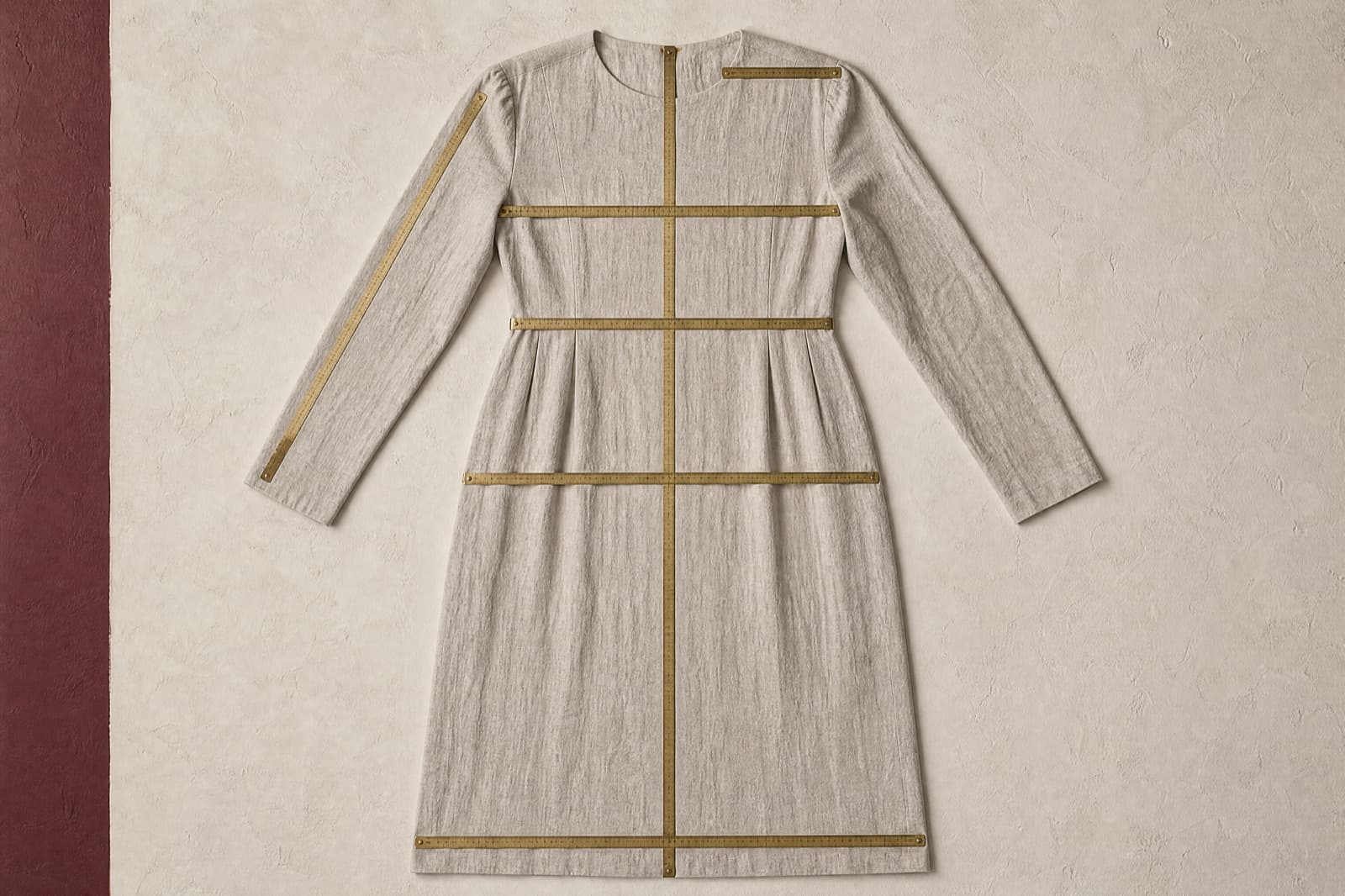
Use a soft tape, over your underwear rather than over clothes, and keep the tape flat against the body without pulling. Ask someone to help with the back measurements if you can — self-measured shoulder and body length are the two that drift most.
- Bust
- Around the fullest part, tape level all the way round, arms down. Breathe out normally.
- Waist
- Around the narrowest part of the torso, usually just above the navel. Do not pull the tape in.
- Hip
- Around the fullest part, generally 20 to 22 cm below the waist, feet together.
- Body length
- From the base of the neck at the back, straight down the spine, to where you want the hem to fall.
- Sleeve length
- From the shoulder point, over a slightly bent elbow, to the wrist bone.
- Shoulder
- Across the back from one shoulder point to the other, following the line of the shoulders.
What the fit notes record
Every piece is tried on by at least two people whose measurements differ materially — at least 8 cm apart in height, or at least 6 cm on one of the three girth measurements. If a piece does not meet that bar, the fit notes block is not shown at all rather than shown thin.
Each wearer records their height, bust, waist and hip, the size they wore, and a verdict on five points of the garment: shoulder, through the bust, through the waist, sleeve length and body length. Verdicts come from a fixed set of three — close, true to measure, relaxed. There is no free text, so a note can only describe how the garment sat.
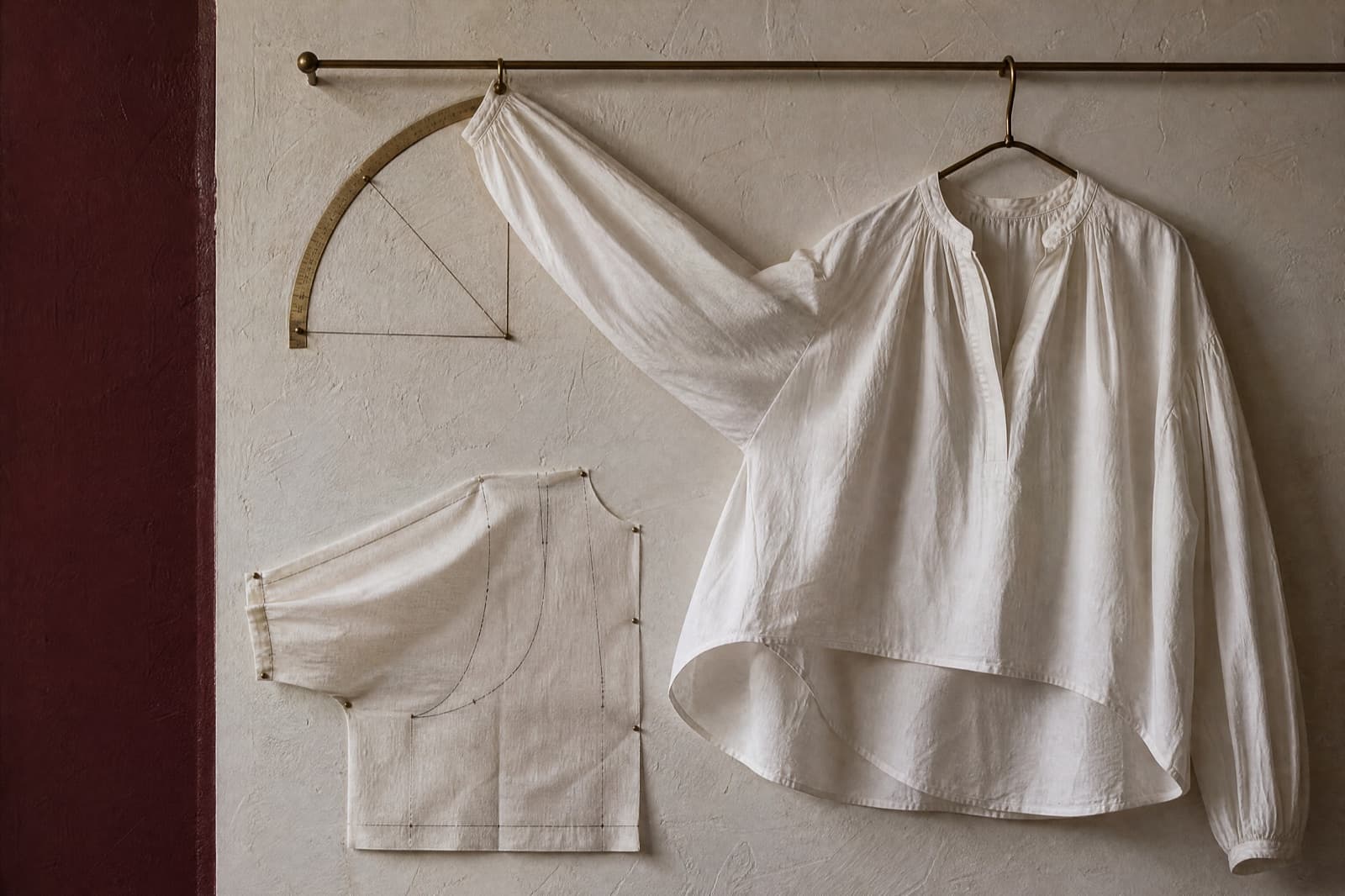
Skirts and dresses also carry the hem drop when seated, measured on a chair, because a hem that works standing can behave differently sitting down. Tops, knitwear and outerwear carry the overhead reach in degrees, measured to the point where the hem starts to lift.
We do not publish opinions about bodies, and the structured options make it impossible to record one. The notes are about the garment.
The reference bodies
| Wearer | Height | Bust | Waist | Hip |
|---|---|---|---|---|
| Wearer A | 163 | 84 | 66 | 92 |
| Wearer B | 176 | 96 | 79 | 104 |
| Wearer C | 158 | 91 | 75 | 101 |
| Wearer D | 171 | 82 | 64 | 90 |
All figures in centimetres. Two of these four try on each piece.
The three opacity ratings
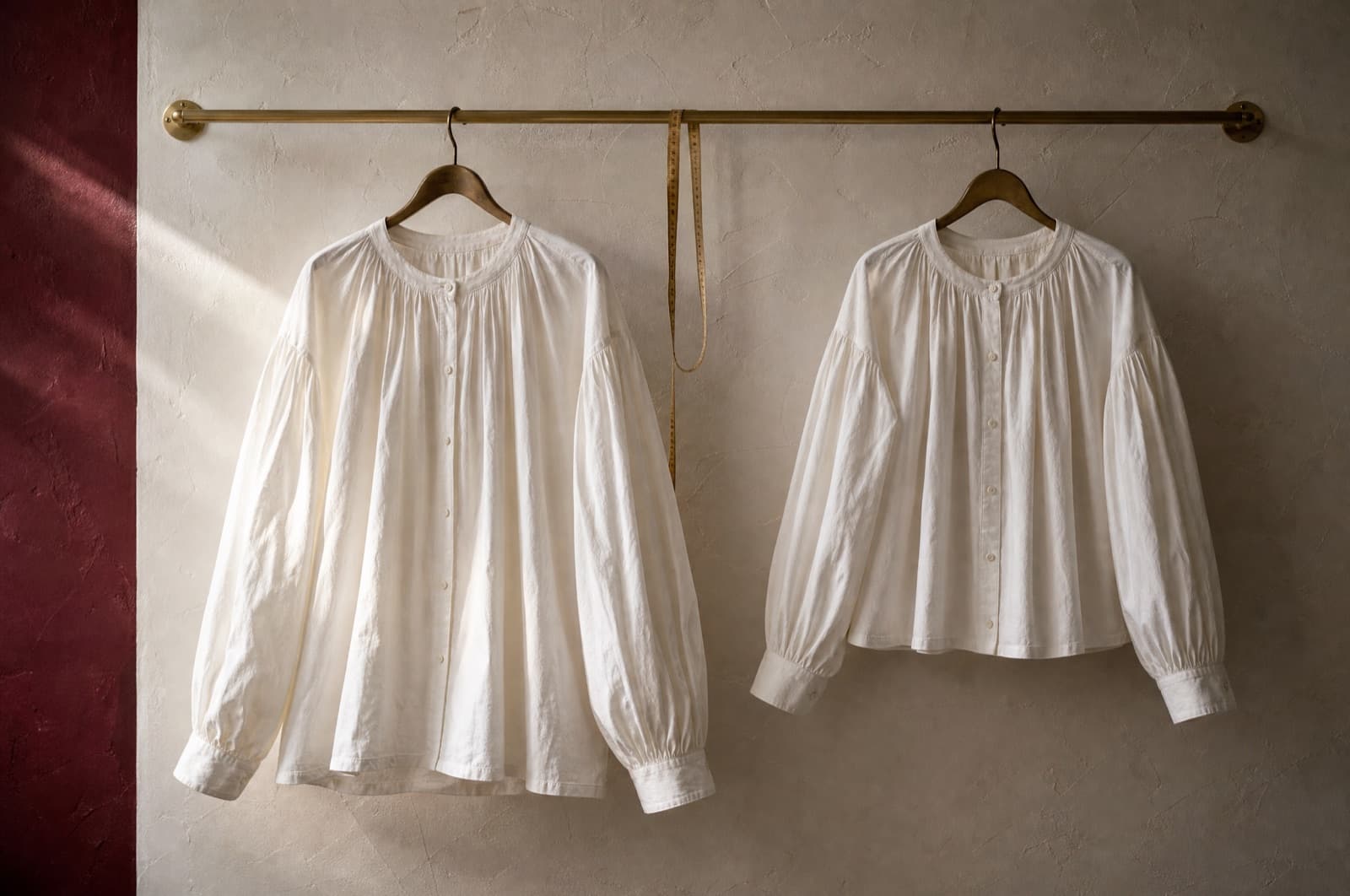
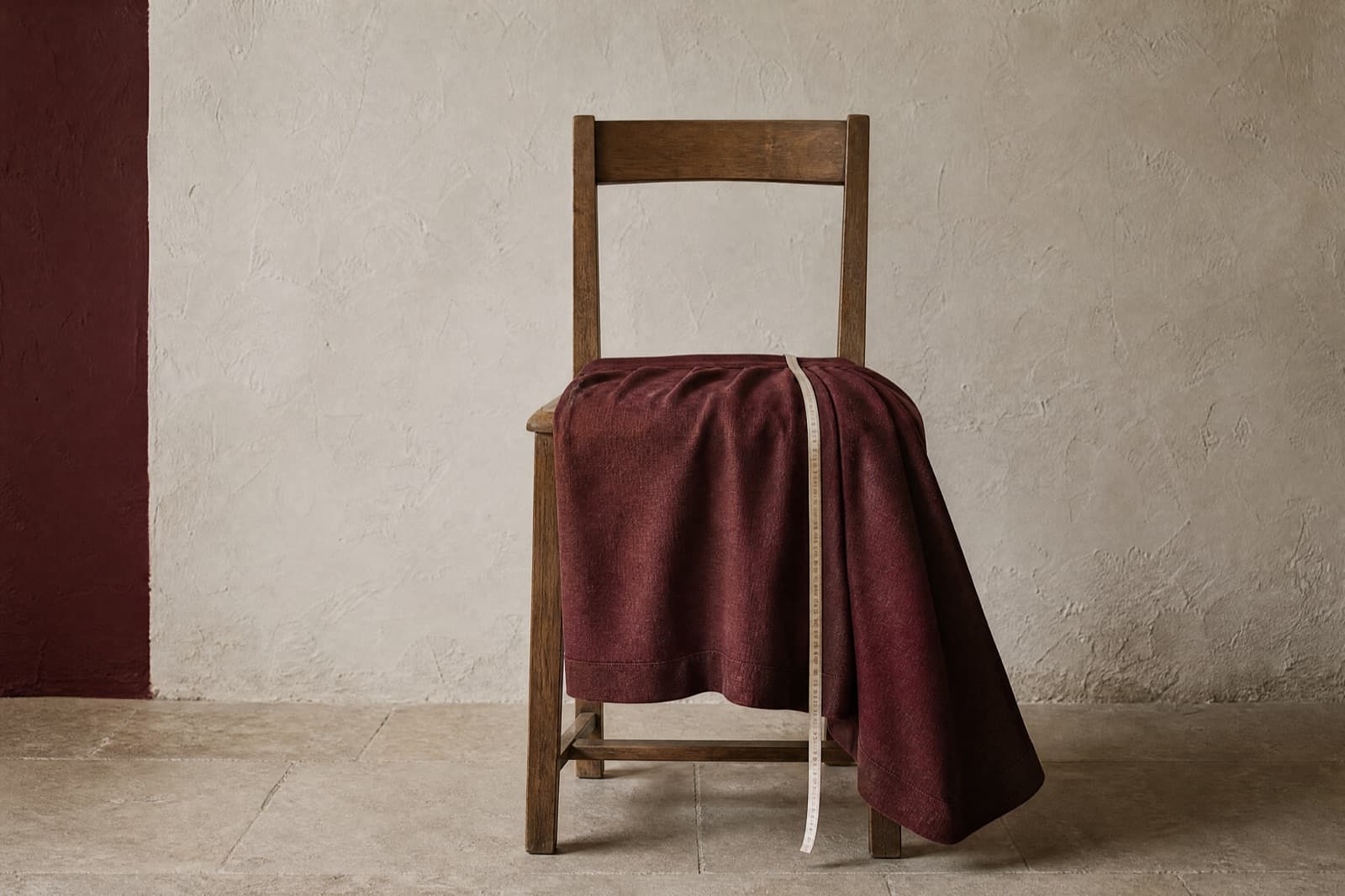
Every piece carries one of three ratings, in words, next to its lining state and its cloth weight. The rating is judged in direct daylight against the reference chart below, not from the photograph. Where a piece is rated semi-sheer or sheer, it also carries a styling note saying what it needs underneath.
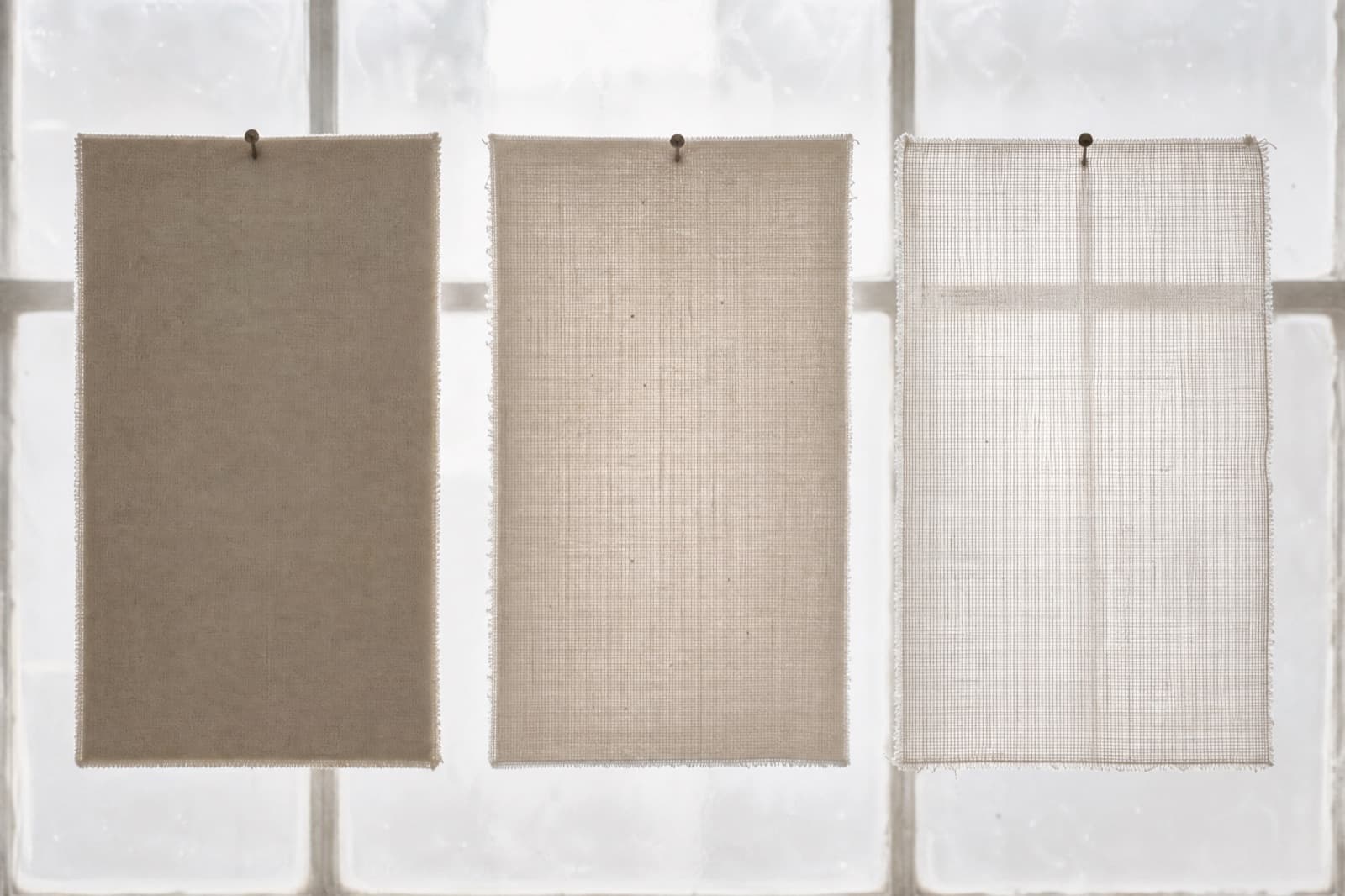
Opaque
Nothing underneath is visible in direct daylight.
Semi-sheer
Outlines and tones underneath are visible in direct daylight.
Sheer
The cloth reads as open. A layer underneath is needed.
Pale and lightweight cloths carry the rating as a rule, and the site will not render a piece under 160 g/m² without one. Lining changes the rating: a voile that would read sheer on its own is rated on the garment as built, lining included.
Still between two sizes?
Send us your measurements and the piece you are looking at, and we will tell you which one we would cut for you and why. We answer within one working day, and we will not comment on your body — only on the garment.